
- CUSTOM PRODUCT
- PRODUCTS & DESIGN
- COMPANY & BRAND
- NEWS
- CONTACT US
Views: 0 Author: Site Editor Publish Time: 2026-08-10 Origin: Site


Athletic seasons operate on strict, unforgiving schedules. Missing the first game or tournament because team uniforms arrived late is a massive failure for coaches and athletic directors. You cannot afford logistical anxiety when managing a roster of athletes. Yet, buyers constantly face a frustrating discrepancy between advertised production windows and actual delivery dates. Vague vendor timelines lead to last-minute scrambling, compromised gear, and unnecessary stress. You need a reliable framework to calculate an accurate custom sportswear lead time. This guide breaks down the hidden pre-production bottlenecks that derail schedules. We will show you how to evaluate vendor reliability before you sign a purchase order and map out a realistic schedule to ensure your athletes step onto the field fully equipped and on time.
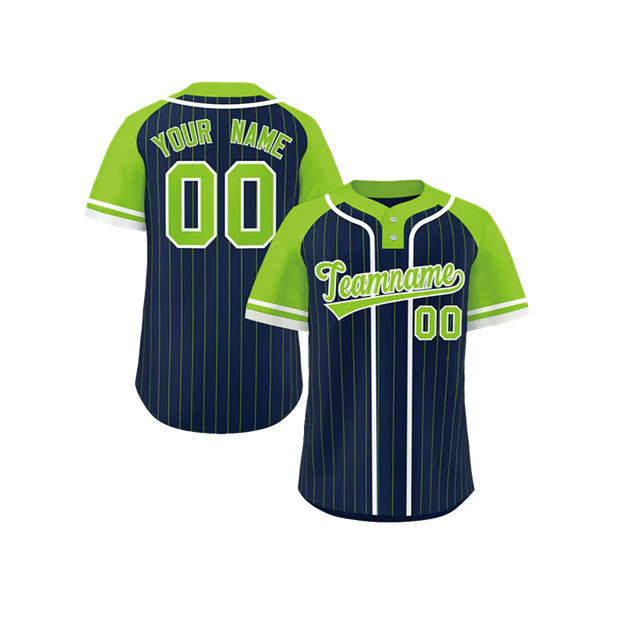
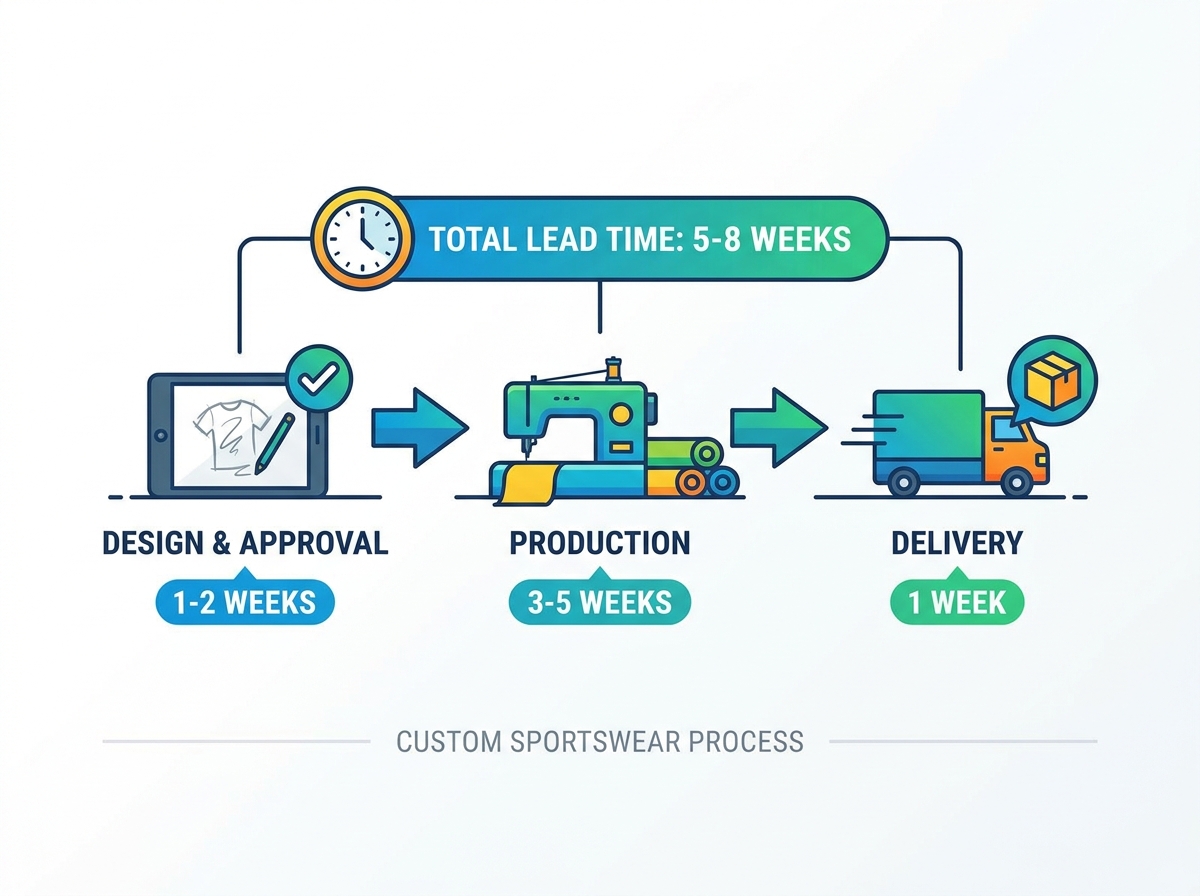
Standard Industry Benchmarks: Most custom uniform orders require a 2-to-4-week active production window, but total turnaround (including design and shipping) often spans 4-to-6 weeks.
The Pre-Production Trap: The most significant delays occur before manufacturing begins, typically during artwork approval, roster finalization, and sizing confirmation.
Decoration Impact: Complex manufacturing processes like full-dye sublimation or detailed embroidery require different lead times compared to standard heat press or screen printing, which rely heavily on blank apparel availability.
Vendor Evaluation Rule: Always evaluate vendors based on guaranteed delivery dates rather than estimated production windows, clarify the definition of "business days," and understand how tiered production speeds impact shipping requirements.
Table of Contents
Many buyers mistakenly believe the clock starts the moment they request a quote. It does not. Pre-production is the most common hidden bottleneck in the apparel industry. Before a single piece of fabric is cut, several critical steps must occur. First, you need vector artwork creation. If you submit a low-resolution image, the factory art department must redraw it to ensure it prints cleanly on a large garment. This process alone can consume several days.
Next comes digital mock-up generation. Vendors will send you digital proofs showing exactly where logos, numbers, and names will sit on the garment. You must review these carefully with your staff. Revision cycles often consume weeks. If a logo is placed too low on the chest or a color looks slightly off, you send it back. The designer revises the file and sends a new proof. You repeat this until the design is perfect.
Simultaneously, you must distribute sizing kits. Gathering accurate roster data from athletes takes significant effort. You might order a physical sizing run of ten jerseys ranging from small to triple-extra-large. You hold a sizing session after practice, but three players are absent. You wait until the following week to get their measurements. You cannot finalize the order until every single player is accounted for on the master spreadsheet. The official custom sportswear lead time only begins after final sign-off. You must approve the art, confirm the roster, and settle payment terms before the factory schedules your job.
Once you approve the final details, active production begins. This phase involves physical manufacturing and decoration. For cut-and-sew garments, workers roll out large bolts of raw fabric. They use industrial laser cutters or manual rotary blades to slice the material into specific panels based on your approved sizing breakdown.
Next, the decoration process happens. Depending on your chosen method, panels are either sublimated, screen-printed, or sent to embroidery stations. If you choose sublimation, large-format inkjet printers lay down your design onto specialized transfer paper. Workers then align this paper with the blank fabric panels and run them through a rotary calendar heat press at roughly 400 degrees Fahrenheit. The heat turns the ink into a gas, permanently dyeing the polyester fibers.
After decoration, sewing operators assemble the panels. They use serger machines to create durable seams and coverstitch machines to hem the sleeves and waistbands. Finally, the garments enter quality assurance. Inspectors check for loose threads, verify that the numbers match the roster, and ensure color consistency across the entire batch. This active manufacturing phase typically takes 10 to 20 business days, depending heavily on the specific facility's capacity and your selected production tier.
Manufacturing completion does not equal delivery. Shipping and transit times add another layer to your schedule. Domestic production usually offers shorter transit times. Standard ground shipping within your own country typically takes three to five days via major carriers. However, domestic manufacturing often carries higher upfront manufacturing costs.
Conversely, overseas manufacturing introduces longer transit periods and logistical variables. Cargo must cross oceans and clear customs. Customs clearance is notoriously unpredictable. A box of uniforms might clear in one day, or a border protection agency might randomly flag it for inspection, holding it in a warehouse for a week. Standard international shipping can take anywhere from seven to fourteen days. Expedited air freight speeds this up significantly, often delivering in three to five days, but it drastically increases your freight costs. You must factor these transit realities into your overall schedule.
The way you choose to decorate your uniforms directly dictates the timeline. Different methods require vastly different manufacturing processes and raw materials.
Full-dye sublimation is a highly popular choice for modern athletics. Because it requires building the uniform from scratch—printing the design before sewing the garment together—sublimation typically takes three to five weeks. The advantage is complete design freedom and durability, as the ink will never crack or peel. The disadvantage is a longer wait time.
Screen printing and heat transfer offer faster turnarounds. These methods generally take 7 to 14 days. However, they are strictly dependent on blank apparel availability. Factories purchase pre-made blank jerseys from wholesale distributors and apply your logos on top. If the distributor is out of medium-sized red jerseys, your entire order halts until they restock.
Embroidery and tackle twill provide premium, textured finishes. Think of classic baseball jerseys or heavy hockey sweaters. These methods require extensive setup time. Technicians must digitize your logo into a stitch file that the embroidery machine can read. Embroidery machines run slower than printing presses, and applying multi-layered tackle twill involves meticulous cutting and sewing. Expect these premium finishes to add significant time to your schedule.
Decoration Method | Average Active Production Time | Primary Dependency |
|---|---|---|
Full-Dye Sublimation | 15 - 25 Business Days | Factory scheduling and fabric cutting |
Screen Printing | 7 - 14 Business Days | Blank apparel stock availability |
Heat Transfer | 7 - 10 Business Days | Blank apparel stock availability |
Embroidery / Tackle Twill | 14 - 21 Business Days | Digitizing setup and machine run time |
The size and complexity of your order heavily influence factory prioritization. Large organizational orders scale differently than single-team requests. If you order uniforms for an entire recreational league consisting of twenty teams, factories must allocate more machine time and labor. High-volume orders sometimes receive priority queue placement because they represent significant factory volume, but they also take longer to physically produce.
Roster complexity can slow things down considerably. Highly individualized gear requires intense scrutiny during quality assurance. If your order features custom names, unique numbers, and varied inseam lengths for every single player, workers must check each garment individually against the master spreadsheet. A simple mistake—like sewing a size large tag into a size medium jersey—requires a complete remake. The more variables you introduce, the longer the quality check takes.
Apparel manufacturing operates on strict seasonal cycles. Peak ordering seasons create massive factory bottlenecks. Late summer is notoriously busy as schools prepare for fall sports like football, volleyball, and soccer. Late winter sees a similar rush for spring sports like baseball, softball, and track. During these peaks, factory capacity constraints routinely add one to two weeks to standard lead times.
Supply chain variables also play a major role. Blank apparel stockouts happen frequently during peak seasons. If thousands of teams order navy blue hoodies in August, wholesale warehouses empty quickly. Fabric shortages can also delay cut-and-sew operations. Global logistics issues occasionally delay the raw materials factories need to spin and dye polyester. You must anticipate these macro-level supply chain realities when planning your season.
You must scrutinize vendor terms and conditions carefully. Many buyers misunderstand how factories count time. A vendor might advertise a "14-day turnaround." If they mean 14 business days, that equates to nearly three full weeks on the calendar. Business days exclude weekends and national holidays. If you place an order right before a major holiday weekend, your production clock stops completely. Always force the vendor to clarify their terminology. Ask them to provide an exact target date rather than a vague day count.
Never accept an estimated shipping date as a final promise. You need a framework for evaluating vendor promises accurately. There is a massive difference between guaranteeing gear in hand by a specific date and estimating when boxes will leave a loading dock. An estimated shipping date only tells you when the factory hopes to finish sewing. It offers zero protection against transit delays. Demand guaranteed delivery dates. A reliable vendor will calculate the transit time backward and adjust their internal production schedule to ensure the box arrives at your facility before your first game.
Many manufacturers offer tiered production timelines. You might see options like Standard 14-day, Fast 7-9 day, or Rush 4-6 day production. You must evaluate the reality of these tiers. Moving up a tier guarantees your order jumps ahead of others in the factory queue.
However, there is a major caveat regarding rush shipping. Selecting a "Rush" production tier almost always mandates purchasing "Rush" shipping to actually meet your deadline. You cannot pay for 4-day manufacturing and then use 7-day ground shipping if your game is next week. Furthermore, rush services often limit your customization options. Factories might restrict you to simple heat-pressed numbers on stock jerseys rather than complex sublimation to hit a tight deadline.
Adding a player after the order is submitted is a critical risk. It can halt production entirely. If the factory has already cut the fabric for 20 jerseys, adding a 21st requires them to pull a new roll, set up the cutting machine again, and recalibrate the printers. This triggers a separate, highly delayed micro-order.
To mitigate this, establish a hard internal deadline for roster finalization. Tell your athletes and parents that late additions are impossible. Furthermore, always order two or three blank, unassigned "blood jerseys" or spare uniforms. If a transfer student joins the team late, or a jersey gets ruined during the first practice, you have immediate backups ready in standard sizes like Large and Extra-Large.
Submitting improper artwork files triggers immediate pre-production delays. Many coaches submit low-resolution JPEGs or screenshots from a website. Factories cannot use these files for large-scale printing. They will reject the art and ask for high-resolution formats, stalling your order.
To mitigate this, secure proper brand assets before engaging the vendor. You need vector files. These typically end in .AI, .EPS, or .SVG extensions. Vector files use mathematical formulas rather than pixels, allowing designers to scale your logo infinitely without losing quality. Getting these files from your school administration or team sponsor upfront eliminates days of frustrating revision loops.
Choosing a highly specific or proprietary color introduces severe risks. If you demand a unique shade of teal that requires custom fabric dyeing, you add weeks to the timeline. Similarly, selecting a specific blank jersey style that is out of stock in key sizes will stall your entire order.
To mitigate this risk, select standard athletic colors whenever possible. Verify blank stock levels across all required sizes before you approve the final quote. Alternatively, utilize full-dye sublimation. With sublimation, exact Pantone matching is controlled digitally by the printer rather than relying on pre-dyed fabric stock. This ensures color consistency without waiting for specific fabric rolls to arrive.
You must calculate your order date backward from your absolute deadline to ensure a smooth process. Follow this calculation model:
Identify the exact date of your first game, scrimmage, or official team photo day.
Subtract one full week for shipping and transit time to account for carrier delays.
Subtract the active production time quoted by your vendor, which is usually three to four weeks.
Subtract a two-week pre-production window to handle sizing kit distribution, roster compilation, and artwork approvals.
If your first game is September 1st, applying this formula means you need to initiate contact with your vendor by early July. This reverse-engineering model provides a realistic, stress-free schedule.
Never plan for a best-case scenario. Logistics rarely go perfectly. You must advise your staff to build a mandatory 10-to-14-day buffer into the schedule. This buffer absorbs unexpected shocks. It accounts for severe weather events delaying cargo trucks. It provides time for necessary remakes if a jersey fails quality assurance at the factory. Implementing the two-week rule ensures that even if your custom sportswear lead time stretches longer than anticipated, your team still takes the field looking professional.
Gather all high-resolution vector logos (.AI or .EPS) from your school administration or sponsors immediately.
Finalize your team sizing charts and lock the roster to prevent late additions from stalling production.
Initiate quote requests right now to secure your spot in the factory queue before peak seasonal demand hits.
Confirm blank apparel stock levels or fabric availability with your vendor before signing the final approval.
A: The clock starts only after you provide final approval on the digital artwork mock-ups, confirm the complete sizing roster, and settle the required payment terms. Requesting a quote or sending an initial email does not start the production timeline.
A: Yes, but options are severely limited. Sub-one-week delivery requires selecting rush production and overnight shipping. You will be restricted to applying basic heat-transfer numbers and logos onto pre-made, in-stock blank apparel. Complex designs are impossible in this timeframe.
A: Yes. Sublimation is a cut-and-sew process where ink is dyed directly into the fabric before the garment is assembled. This typically takes three to five weeks. Screen printing applies ink onto pre-made blank shirts, usually taking one to two weeks.
A: Production time is the period required to physically manufacture, decorate, and inspect the garments at the factory. Shipping time is the transit duration required to move the finished boxes from the factory loading dock to your final delivery address.
A: Adding a player after the order is approved halts the process. The factory must pull new fabric, recalibrate machines, and create a separate micro-order. This causes significant delays. Always order a few blank spare jerseys to avoid this issue entirely.
A: Absolutely. Late summer for fall sports and late winter for spring sports are peak manufacturing seasons. Factory capacity fills up rapidly during these months, routinely adding one to two extra weeks to standard production timelines.


